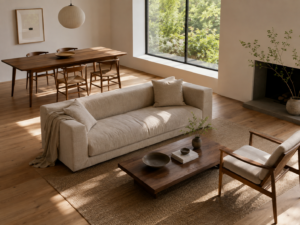
The line between personal life and professional responsibilities has become increasingly blurred. Kitchen tables now serve as conference rooms, and living room couches double as lunch spots. When shared areas mean shared clutter—especially with family members or roommates—creating a dedicated, purpose-driven workspace becomes essential.
Minimalism in your work environment doesn’t mean living with bare essentials or stark emptiness. It means intentionally removing distractions to laser-focus on what truly matters: your projects, ideas, and creative flow. A well-organized workspace isn’t cold or sterile—it’s calm, clear, and perfectly tuned to help you become your most productive self.
The best part? You don’t need a major renovation or unlimited budget to create this transformation. Smart, intentional choices that prioritize function and simplicity can make all the difference. This approach directly impacts your output and mental well-being, making the effort worthwhile.
Throughout this guide, we’ll explore practical strategies for designing a space that enhances concentration and creativity. From defining your vision to maintaining organization long-term, you’ll discover actionable steps that work regardless of your living situation or available square footage.
Key Takeaways
- Creating a dedicated workspace helps separate professional and personal life
- Minimalist design focuses on removing distractions rather than deprivation
- Intentional organization directly boosts productivity and mental clarity
- Effective workspace design doesn’t require large budgets or renovations
- Simple, functional choices can transform any area into a productive environment
- A calm, clear workspace supports better focus and creative thinking
- Practical solutions work for various living situations and space constraints
Defining Your Minimalist Home Office Vision
Before selecting furniture or clearing out a closet, you need a clear vision for your productive environment. This vision acts as your blueprint, ensuring every choice supports your ultimate goal: a space that fuels your work.
Understanding Minimalism in the Workplace
Forget the idea that a minimalist workspace means a cold, empty room. True minimalism here is about intentionality. It’s the practice of removing visual and mental clutter that hampers your focus.
This philosophy directly boosts your productivity by reducing stress and simplifying decision-making. Your mind can dedicate its energy to your actual tasks, not on navigating chaos.
Setting Personal and Professional Goals
Your workspace must serve your unique work style. Ask yourself key questions to define its purpose:
- What type of work do I do most often?
- What distractions typically break my concentration?
- What tools do I need within arm’s reach?
Your answers will shape a vision that is both functional and personally inspiring. The right look isn’t about trends; it’s about what helps you do your best work.
Choosing the Ideal Space for Your Office
Where you place your desk and equipment significantly impacts your ability to concentrate and maintain work-life boundaries. The right location transforms any area into a productive environment that supports your workflow.
Finding a Quiet Nook or Dedicated Room
Look for spots that naturally minimize interruptions. A spare bedroom or unused den offers privacy and separation from household activities. Even a quiet corner can work wonders when chosen thoughtfully.
Natural light from a window boosts mood and energy levels. Position your setup to maximize this free resource. Ensure there’s enough breathing room for comfortable movement.
| Space Type | Pros | Cons | Best For |
|---|---|---|---|
| Dedicated Room | Complete privacy, permanent setup | Requires available space | Full-time remote workers |
| Quiet Corner | Flexible, uses existing space | Limited sound barriers | Part-time or hybrid workers |
| Converted Nook | Creative use of underutilized areas | May feel cramped | Small living situations |
Dealing with Shared Spaces and Flexibility
Many people share their living areas with family or roommates. Temporary partitions create visual boundaries without permanent changes. These solutions work well for rental situations.
Modular systems offer flexibility when life circumstances shift. They’re easy to install and reconfigure as needed. This approach maintains the separation between professional and personal spaces.
Even imperfect areas can become effective workspaces with intentional planning. The key is creating clear distinctions that support focus and productivity throughout your day.
Home Office Minimalism: Essential Setup Tips
Creating intentional separation between different life activities boosts productivity. Your workspace setup should clearly define where work begins and personal life pauses. These essential tips help establish boundaries that support focused work.
Claim Your Space and Create Boundaries
Claiming your area involves more than furniture placement. It’s about mentally declaring this space for professional tasks. This psychological shift helps your brain enter productive mode.
Physical boundaries create tangible separation. Temporary walls and modular partitions offer flexible solutions. They work well in shared living situations.
Psychological boundaries are equally important. Establish clear work hours and communicate them to household members. Consistent routines train your brain to focus.
| Boundary Type | Solutions | Best For | Setup Difficulty |
|---|---|---|---|
| Physical Dividers | Room dividers, partition walls | Open-concept spaces | Easy to moderate |
| Visual Markers | Area rugs, specific furniture | Small areas | Very easy |
| Psychological Cues | Work schedules, communication | All situations | Requires consistency |
Even subtle markers make a difference. A dedicated chair or specific rug defines your zone. These small things create powerful mental associations.
Position your desk to minimize distractions. Ensure electrical access and consider traffic patterns. Smart placement is a key part of successful setup.
Ruthlessly Declutter Your Workspace
True productivity emerges not from what you add to your space, but from what you courageously remove. Before considering storage solutions, tackle the essential first step of elimination.
Assessing What Truly Matters
Start by clearing everything off your desk surface completely. This blank slate forces honest evaluation of each item.
Ask three critical questions about every object: Do I use this daily or weekly? Does it serve a clear functional purpose? Does it create mental clarity or visual noise?
This assessment process helps identify what genuinely supports your work versus what simply occupies space.
Organizing with Purpose
After elimination, categorize remaining items into logical tiers. Daily essentials stay on your desk. Frequently used supplies go in nearby storage.
Create designated zones for specific functions. Keep an “inbox” area for pending items off your main workspace.
| Item Category | Frequency of Use | Storage Location | Visibility |
|---|---|---|---|
| Daily Essentials | Every workday | Desk surface | Always visible |
| Frequent Supplies | Weekly basis | Drawers/shelves | Easy access |
| Occasional Items | Monthly or less | Closed storage | Out of sight |
Implementing these organizational strategies maintains your focused environment. End each day with a five-minute reset to prevent clutter accumulation.
This daily ritual keeps your workspace functional and supports consistent productivity throughout your workweek.
Selecting Multi-Functional, Minimalist Furniture
The right furniture transforms your workspace from chaotic to calm. Each piece should serve a clear purpose while maintaining clean aesthetics.
Choose items with simple silhouettes and neutral tones. Avoid ornate details that create visual noise.
Desks with Built-in Storage
Integrated drawers eliminate bulky file cabinets. Slim designs provide just enough space for daily essentials.
Consider wall-mounted options for tiny areas. These fold away when not in use, maximizing flexibility.
Smart storage keeps your surface clear for focused work. This approach supports productivity throughout the day.
Ergonomic and Sleek Office Chairs
Comfort should never compromise style. Look for chairs with adjustable height and proper lumbar support.
Ergonomic designs reduce physical strain during long hours. This investment directly improves your focus and well-being.
Test furniture before purchasing. Ensure each piece fits your space and serves multiple functions beautifully.
Adding Efficient Storage Solutions
The most effective storage systems work so seamlessly you barely notice them. They keep essentials within reach while maintaining clean surfaces and clear sightlines.
Think of storage as your silent productivity partner. The right solutions eliminate visual noise that competes for your attention.
Closed Storage and Hidden Compartments
Closed storage options like cabinets and drawers keep items out of sight but accessible. This approach reduces mental clutter significantly.
Built-in compartments within desks provide smart storage without adding bulk. They create a streamlined look while offering easy access to daily supplies.
Vertical space offers excellent storage potential. Wall-mounted shelves and floating cabinets maximize capacity without consuming floor area.
Create distinct zones for active and archived items. Frequently used materials stay nearby, while reference files store farther away.
Concealing technology like printers maintains visual calm. Chic baskets can hide smaller items while adding texture to your space.
These storage solutions support focus by keeping your environment organized and distraction-free.
Controlling Visual and Mental Clutter
Your brain processes everything your eyes see, even when you’re trying to focus on work. Visual distractions create a constant low-level drain on your mental energy reserves.
This connection between what you see and how you think is powerful. A calm visual environment supports clear thinking and sustained attention.
Streamlining Desk Decor and Colors
Choose a limited color palette featuring calm neutrals. Soft grays, muted blues, and warm beiges create a soothing aesthetic that promotes concentration.
Stick to one or two meaningful decorative items on your work surface. A small plant or single framed photo adds personality without creating visual noise.
Unified materials create cohesive visual harmony. Match wood tones and metal finishes across your furniture pieces for intentional design.
Keep your primary work surface as clear as possible. Empty space allows your mind to focus on current tasks without competing visual stimuli.
For shared areas, consider a simple room divider. This solution blocks household chaos while creating a professional background for video calls.
The right color scheme and thoughtful decor choices significantly impact your space feel. A visually calm environment supports productivity throughout your workday.
Maximizing Natural Light and Smart Lighting Solutions
Sunlight streaming through your window does more than just brighten your space—it transforms your entire work experience. Natural light creates an open, airy feel that complements clean design principles perfectly. It also regulates your circadian rhythm and boosts your mood throughout the day.
Positioning Your Desk for Optimal Sunlight
Place your desk perpendicular to the window for soft, diffused light across your workspace. This setup prevents harsh glare on your screen while maximizing natural illumination.
Consider the sun’s path during different times of day. Morning light tends to be softer, while afternoon sun can be more intense. Adjust your position seasonally as the sun’s angle changes.
Using Sheer Curtains and Diffused Lighting
Sheer curtains filter harsh sunlight while maintaining brightness in your space. They create a gentle glow that reduces eye strain during long work sessions.
For artificial lighting, layer adjustable task lamps with soft ambient sources. Choose energy-efficient LED options with warmer tones for evening work. This balanced approach supports focus at any time of day.
Incorporating Thoughtful, Minimalist Décor
Curating meaningful decorative elements creates a workspace that feels both personal and professionally focused. Many people worry that clean design means cold or sterile environments, but the opposite is true when done intentionally.
Select pieces that serve a clear purpose or spark positive emotions. Each item should either inspire calm, focus, or joy rather than simply filling empty space.
Choosing Art and Personal Touches
Start with one meaningful artwork that aligns with your color palette. A soft abstract painting or soothing landscape can create visual interest without overwhelming your space.
Consider a small framed photo or inspirational quote that centers you. Keep these items off your main work surface to maintain functionality.
Plants bring life and softness to your environment. Low-maintenance varieties like snake plants or pothos thrive with minimal care while improving air quality.
Choose stylish pots in neutral tones that complement your overall aesthetic. Remember the principle of “meaning over more”—one or two resonant items beat a dozen random knick-knacks.
Thoughtful decor personalizes your area without compromising clean design. It creates a space that feels uniquely yours and genuinely supports your work mindset.
Setting Digital Boundaries for a Clutter-Free Mind
Digital clutter can sabotage your productivity just as effectively as physical mess. Your technology should enhance your workflow, not create hidden chaos.
A clean digital environment supports the same focus you’ve cultivated in your physical space. It’s about extending intentional organization to your screens and devices.
Organizing Your Desktop and Devices
Start with your computer’s desktop. Limit icons to 5-10 essential shortcuts or folders. If you can’t see your wallpaper, it’s time for a digital cleanup.
Schedule weekly 10-minute sessions to organize files and delete unused apps. This prevents digital buildup that slows down your work flow.
Customize notifications so only urgent messages interrupt your deep work. Group chats and social alerts can wait for designated checking times.
Use built-in focus modes during important tasks. These settings help maintain concentration throughout your work day.
Create clear start and stop rituals. Close all tabs and log out of accounts at the end of each day. This gives you a mental “clock-out” moment.
Task management apps keep projects organized without cluttering your physical desk. They help track progress and deadlines efficiently.
Conclusion
Creating a space that truly serves your workflow emerges from ongoing refinement and personal adaptation. It’s not about achieving instant perfection but about making consistent, smart choices that accumulate over time.
Throughout this guide, you’ve discovered how intentional placement, smart storage solutions, and thoughtful lighting can transform any area. These elements work together to support your productivity and creative flow.
Remember that your setup should evolve with your needs. The best approach adapts these principles to serve your unique work style rather than following rigid rules.
Even small adjustments create immediate improvements in your focus and mood. You now have the knowledge to build an environment where you can do your best work, regardless of what’s happening around you.