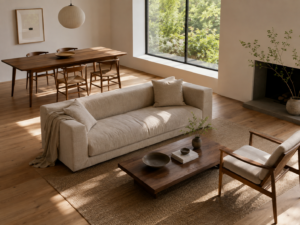
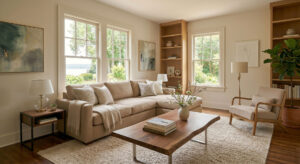
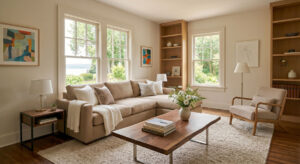
Many people think minimalist spaces should be completely empty. This isn’t true. Even the cleanest rooms need something for your eyes to land on. A well-placed visual anchor gives a room purpose and direction.
Think of it like reading a book. Every page needs a starting point. Your living space works the same way. A strategic focal point design helps visitors understand your room’s layout. It guides them through the space without feeling overwhelming.
Minimalism means every item has intention. Nothing is there by accident. Your visual element becomes the intentional star of the show. It creates structure and hierarchy in simplified environments.
Some worry that adding interest contradicts minimalist principles. Actually, it enhances them. The right anchor creates balance. It brings life to simplicity without creating clutter.
This guide will show you practical strategies. You’ll learn how to create stunning focal points that respect minimalist values. We’ll explore techniques that work with clean aesthetics.
Creating these anchors requires restraint and careful planning. You’ll discover how visual weight works in simplified spaces. Let’s begin this journey toward purposeful interior design.
Key Takeaways
- Minimalist spaces still benefit from having a clear visual starting point
- A well-chosen anchor helps guide people through your room naturally
- Every element in minimalism should serve a specific purpose
- Adding interest doesn’t mean abandoning clean aesthetics
- Strategic placement creates balance without clutter
- Restraint and intention are key to successful minimalist design
- Visual hierarchy helps simplified spaces feel complete and welcoming
Understanding Minimalism and Visual Anchors
Contrary to popular belief, minimalist environments thrive on strategic placement of meaningful elements. This approach creates spaces that feel both calm and intentional.
Defining Minimalist Aesthetics
Minimalist aesthetics center on simplicity and functionality. The philosophy eliminates unnecessary items to create organized spaces. Each piece serves a specific purpose without creating visual clutter.
Quality always beats quantity in this style. Every element contributes meaningfully to the overall composition. The result is a space that feels deliberate and uncluttered.
Role of Visual Anchors in Design
Even simplified spaces need structure and hierarchy. A strong focal point provides an entry point that guides the eye. It creates a sense of order and direction.
Emphasis works through contrast in any room design. For one element to stand out, others must recede into the background. This contrast establishes clear visual hierarchy.
| Approach Aspect | Minimalist Method | Traditional Method |
|---|---|---|
| Primary Purpose | Functional necessity | Decorative abundance |
| Visual Weight | Single dominant element | Multiple competing features |
| Overall Outcome | Calm, intentional space | Busy, layered environment |
Visual anchors enhance minimalism by providing intentional direction. They prevent spaces from feeling empty while maintaining clean aesthetics. A well-chosen focal point creates balance without overwhelming viewers.
Implementing Focal Point Design in Minimalist Spaces
The art of minimalist interior arrangement relies on selecting one powerful element to command attention. This dominant feature carries the greatest visual weight, becoming the natural starting point for anyone entering the room. It establishes a clear hierarchy that guides the eye through your space.
Every choice must be deliberate when implementing this approach. Consider placement, scale, and how your chosen element relates to surrounding items. Quality always trumps quantity in minimalist environments.
Begin by assessing your current layout. Identify potential locations where a strong feature would make the most impact. Think about sightlines and traffic flow throughout the room.
Your implementation should maintain the breathing room that characterizes minimalist interiors. Negative space around your dominant element enhances its impact without creating clutter.
Successful implementation requires understanding how your centerpiece functions within the entire space. Consider how it interacts with other elements while remaining the clear star of your room’s story.
Analyzing Architectural Layout for Visual Hierarchy
Your room’s existing structure holds the key to effortless visual anchors. Before adding anything new, look at what’s already there. Architecture often provides a built-in starting point.
This approach aligns perfectly with minimalist values. You work with what exists instead of creating from scratch. It’s about enhancement, not addition.
Identifying Natural Focal Points
Walk into your room and notice where your eyes land first. You might naturally look toward a fireplace or a wall of large windows. These elements already command attention.
Other strong contenders include vaulted ceilings or unique structural details. The goal is to identify a natural focal point that guides the overall design. This prevents fighting against your room’s innate flow.
Understanding visual hierarchy starts here. It’s about recognizing the inherent balance in your space.
Enhancing Architectural Features
Once you find a strong element, make it shine. Use subtle techniques that add depth without clutter. Think about painting a fireplace surround in a soft, contrasting shade.
You can frame a beautiful window with minimal treatments. This draws the eye to the view outside. The architecture becomes the art.
Elements like exposed brick or wood beams can be highlighted. Let these textures provide visual interest. Your job is to curate, not cover.
| Architectural Feature | Minimalist Enhancement | Resulting Effect |
|---|---|---|
| Fireplace | Paint surround a contrasting neutral tone | Creates a warm, intentional center |
| Large Windows | Use simple, clean-lined framing | Emphasizes light and the outside view |
| Exposed Brick Wall | Keep clear of decorations; let texture speak | Adds rustic character and depth |
| Vaulted Ceiling | Ensure lighting highlights the height | Makes the room feel spacious and airy |
Analyzing your room’s architecture first is a crucial step. It ensures your minimalist design works in harmony with the space. You build upon a solid, existing foundation.
Creating a Dominant Element Without Clutter
The secret to impactful minimalist interiors lies in creating one element that naturally commands attention. This dominant feature becomes your room’s natural starting point without adding unnecessary items.
Achieving Visual Weight with Contrast
Visual weight determines how much an element attracts the eye. Identical items can’t dominate each other. Your centerpiece must stand out through intentional differences.
Contrast becomes your primary tool for creating hierarchy. Think about size, color, texture, or form differences. A dark sofa against light walls immediately draws focus.
Practical techniques include placing a large-scale artwork in a simple room. Or introducing textured surfaces against smooth backgrounds. These contrasts create clear visual hierarchy.
Balance is crucial. Your dominant element should command attention without overwhelming the space. Restraint ensures the feature enhances rather than clutters your minimalist environment.
This approach focuses on thoughtful selection rather than quantity. Strategic contrast creates impact while respecting minimalist principles of simplicity.
The Role of Color and Texture in Enhancing Focus
Subtle shifts in color and texture can transform a minimalist room from sterile to stunning. These elements work together to create natural anchors that guide the eye without adding physical clutter. They provide the visual interest that makes simplified spaces feel complete.
Both color and texture serve as powerful tools for enhancing focus. They create focal points while respecting minimalist principles of restraint.
Using Color Accents to Draw Attention
Strategic color placement can dramatically alter a room’s energy. Painting one wall in a contrasting shade immediately creates a center of attention. Even within neutral schemes, warm whites against cool grays establish clear hierarchy.
Bold wallpaper offers another effective solution. A single accent wall with dramatic pattern becomes an instant focal point. This approach works particularly well in rooms lacking architectural features.
The key is contrast. Dark elements against light backgrounds naturally draw the eye. This technique requires no additional furniture or accessories.
Incorporating Natural Textures
Texture adds depth and character to minimalist spaces. Exposed brick walls, wood grain, or stone surfaces provide tactile appeal. These elements anchor the eye through their inherent richness.
Consider placing smooth leather furniture against rough brick. Or hang a heavily textured textile on pristine white walls. These contrasts create natural focal points without competing elements.
Natural materials bring warmth and authenticity to clean aesthetics. They add visual weight while maintaining the simplicity minimalism demands.
Lighting Strategies to Enhance Visual Anchors
Lighting transforms minimalist spaces from simple to spectacular. The right illumination can make your room feel warm and intentional. It guides the eye exactly where you want it to go.
Strategic lighting creates clear visual hierarchy without adding physical items. It’s one of the most effective tools for minimalist environments. You can highlight what matters while keeping surfaces clean.
Accent Lighting Techniques
Spotlights and wall sconces work wonders for drawing attention. Place them above artwork or architectural features. This creates instant emphasis without clutter.
Pendant lights serve dual purposes beautifully. They provide necessary illumination while acting as decorative elements. A single, well-chosen fixture can become the room’s star.
Consider this lighting comparison for different needs:
| Lighting Type | Best Use | Visual Impact |
|---|---|---|
| Spotlights | Highlighting artwork | Creates dramatic focus |
| Wall Sconces | Accenting textures | Adds depth and warmth |
| Pendant Lights | Room centerpieces | Becomes main feature |
Balancing Natural and Artificial Light
Position furniture to capitalize on daylight. Windows can naturally highlight your favorite elements. This works especially well during daytime hours.
Evening lighting requires more planning. Use adjustable fixtures to maintain focus after dark. Dimmers help control the mood perfectly.
Remember that less is more with minimalist lighting. Choose fewer fixtures with greater impact. Your space will feel both illuminated and serene.
Integrating Artwork and Statement Furniture
Minimalist interiors gain character when anchored by carefully chosen artistic elements. These pieces provide visual interest while maintaining clean aesthetics. They become the intentional stars of your space.
Selecting Impactful Artwork
Choose one large-scale piece instead of many small ones. Oversized artwork commands attention without clutter. Consider a gallery wall visible from the main entrance.
Scale matters greatly in minimalist rooms. A Sputnik-inspired light fixture demonstrates this principle well. Smaller alternatives lack the same visual impact.
Statement furniture pieces create instant appeal. Bold sofas or unique dining tables serve as primary anchors. They elevate the entire room’s aesthetic.
| Approach | Artwork Strategy | Furniture Strategy |
|---|---|---|
| Single Element | One large-scale painting | Bold colored sofa |
| Gallery Style | Curated wall collection | Matching chair set |
| Sculptural Focus | Three-dimensional installation | Unique table design |
Balance is essential when combining these elements. Pair dramatic artwork with simple furniture. Let each piece shine without competition.
Creating Focal Points with Tailored Interior Accessories
Thoughtfully chosen accessories bring life to minimalist rooms while respecting their clean principles. These items serve as intentional centers of attention without creating clutter. They add personality to your home while maintaining the simplicity you value.
Plants make excellent natural focal points. A single large potted tree commands attention beautifully. Smaller plant groupings create visual interest through organic forms and textures.
“In minimalism, every accessory must earn its place through both function and form.”
Accentuate existing architectural features with simple additions. Place a decorative bowl near a fireplace or use open shelving to highlight a favorite wall. These subtle enhancements draw the eye to your room’s best features.
Strategic placement of surrounding decor supports your main element. Textiles like throws and pillows can enhance an accent chair beautifully. They add depth and texture while maintaining clean aesthetics.
| Plant Strategy | Best Placement | Visual Impact |
|---|---|---|
| Single Large Tree | Near natural light sources | Creates strong center of attention |
| Grouped Small Plants | On shelves or windowsills | Adds layered interest |
| Hanging Varieties | From ceiling or wall mounts | Draws eyes upward |
The minimalist approach to accessories means choosing fewer, higher-quality pieces. Each item should genuinely enhance your space. This discipline creates focal points that feel intentional rather than accidental.
Your interior should tell a cohesive story. Every accessory contributes to the overall narrative without competing for attention. This careful balance makes your space feel both personal and peaceful.
Balancing Multiple Visual Hierarchies for Cohesive Design
The most sophisticated minimalist rooms operate on multiple levels of visual importance. This layered approach creates depth while maintaining the clean aesthetics you love. It prevents spaces from feeling flat or one-dimensional.
Establishing Levels of Dominance
A three-level hierarchy system works beautifully in minimalist environments. Your primary element commands immediate attention as the main entry point. Secondary features support this dominant piece without competing for focus.
The third level contains all remaining elements that provide context. This structured approach ensures viewers navigate your space intuitively. Each level has distinct visual weight that creates clear progression.
Some rooms naturally accommodate multiple focal areas. Open-plan layouts or multi-functional spaces benefit from this approach. The key is ensuring each zone has its own clear hierarchy.
Practical strategies include varying scale, using different materials, or positioning elements in distinct areas. This prevents visual competition while maintaining overall harmony. The result is a cohesive design that feels intentional and balanced.
Achieving this layered effect requires careful planning and restraint. Even with multiple points of interest, the space should maintain minimalist clarity. Every element must contribute to the overall narrative without creating confusion.
Optimizing Space Flow and Functionality
Effective room arrangement balances visual appeal with practical use. Your space should work beautifully for daily life while highlighting key features. This creates harmony between form and function.
Typically, the main attraction faces the entrance. This allows visitors to immediately understand the room’s purpose. The visual hierarchy becomes clear upon entry.
While this centerpiece often guides furniture placement, seating doesn’t always need to face it directly. Arrangements can remain open to the feature while serving functional needs. This flexibility maintains both focus and usability.
The primary purpose of your area should drive planning decisions. Consider how you actually use the space daily. This ensures visual choices support rather than hinder functionality.
| Planning Aspect | Traditional Approach | Minimalist Approach |
|---|---|---|
| Furniture Orientation | Directly faces focal element | Open to feature with flexibility |
| Traffic Flow | Often secondary consideration | Primary planning factor |
| Room Purpose | Sometimes sacrificed for aesthetics | Guides all design decisions |
Position furniture to create natural movement patterns. Clear pathways should guide people through the space comfortably. This optimizes flow while emphasizing your key feature.
Balance aesthetic goals with practical needs. Ensure furniture placement allows comfortable use while highlighting your centerpiece. The result is a space that works beautifully visually and functionally.
Expert Tricks for Avoiding Competing Design Elements
Expert designers understand that restraint creates more impact than abundance in minimalist spaces. When you try to emphasize everything, nothing truly stands out. This creates visual clutter where all elements compete for your eye’s attention.
Competing features can make a room feel confusing and overwhelming. A clearly defined center should dominate without being overshadowed. Supporting pieces must enhance rather than challenge the main attraction.
Minimizing Visual Clutter
Start by limiting your color palette to two or three harmonious tones. Reduce decorative objects to only those that serve a purpose. Ensure negative space around your main feature allows it to breathe naturally.
Every item in the room should undergo a simple test. Ask whether it supports the primary element or creates unnecessary competition. Remove anything that distracts from your intentional center.
Enhancing Focal Clarity
Furniture arrangements should highlight rather than hide your main feature. Avoid setups that block key viewing angles. Position seating to acknowledge the room’s natural center.
Surround your primary element with minimal decor that complements without competing. This creates cohesion where the main feature remains dominant. The result is a space that feels intentional and peaceful.
| Design Approach | Competing Elements | Harmonious Solution |
|---|---|---|
| Color Strategy | Multiple bold colors | Tight, complementary palette |
| Furniture Placement | Blocking main feature | Open arrangement |
| Decor Quantity | Many small items | Few intentional pieces |
Avoiding competition requires constant evaluation and discipline. Each element must earn its place by serving the overall vision. This restraint creates the clarity that makes minimalist spaces so appealing.
Case Studies: Inspiring Focal Points in Modern Interiors
Real-world examples provide the clearest path to understanding how visual anchors function in actual homes. These case studies demonstrate successful implementations in contemporary spaces.
Each example shows how professionals create interest while maintaining minimalist principles. You’ll see how different approaches work in various room settings.
Living Room Focal Points and Gallery Walls
Alison Jennison Interiors transformed a Brooklyn townhouse with multiple harmonious anchors. Rustic wood ceiling beams draw eyes upward while an antique stone mantel grounds the space.
Exposed brick walls add warmth without clutter. This approach shows how architectural features can work together beautifully.
Desiree Burns Interiors created a secondary anchor with an arched glass-front shelving unit between windows. The fireplace serves as the primary centerpiece on the adjacent wall.
This demonstrates how multiple elements can complement rather than compete. Each feature has its own purpose and placement.
| Space Type | Primary Anchor | Secondary Element | Minimalist Technique |
|---|---|---|---|
| Brooklyn Townhouse | Antique stone fireplace | Exposed brick walls | Using existing architecture |
| Cookie Cutter Apartment | Bold peonies wallpaper | Large round mirror | Creating drama with pattern |
| Modern Living Room | Gallery wall on black surface | Strategic lighting | Color contrast emphasis |
Bold wallpaper can transform generic spaces dramatically. One apartment features peonies pattern topped with a large round mirror.
This creates a stunning center in an otherwise ordinary room. The mirror reflects light and expands the sense of space.
Gallery walls make excellent focal points when mounted strategically. Placing artwork on a jet black wall near the entrance immediately captures attention.
These examples show the range of possibilities within minimalist frameworks. From natural features to created elements, each solution maintains clean aesthetics while providing visual interest.
Conclusion
Well-planned visual anchors elevate clean spaces from empty to intentionally curated. This journey through focal point design reveals how strategic emphasis enhances rather than contradicts minimalist principles.
Successful implementation begins with understanding your room’s architecture and purpose. Every choice should serve the space’s natural flow while maintaining clean aesthetics.
Remember that quality always triumphs over quantity in minimalist interior design. Select one or two powerful elements that command attention without overwhelming the viewer.
Your home becomes a welcoming canvas where thoughtful focal points provide structure and personality. They transform stark rooms into sophisticated environments that reflect your style.
Embrace this approach to create spaces that feel both intentional and inviting. The result is a harmonious balance between simplicity and visual interest.