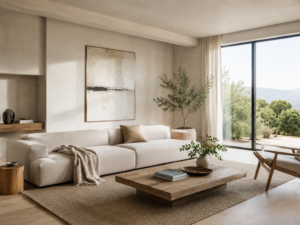
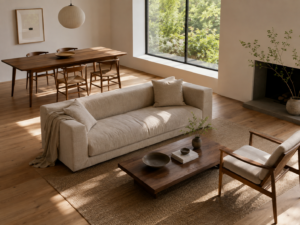
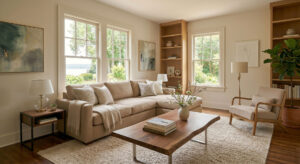
In clean, uncluttered spaces, texture becomes the primary language of luxury. It speaks through the grain of wood, the weave of fabric, and the patina of metal. The true power of this design approach lies not in what it removes, but in what it reveals.
Texture transforms stark emptiness into sophisticated warmth. Every surface serves both functional necessity and sensory engagement. The interplay between smooth and rough, matte and glossy, soft and hard establishes rhythm throughout the home.
This prevents monotony in simple environments. Premium materials like linen, stone, wood, and metal create depth without visual clutter. They act as silent architects of refined spaces where restraint doesn’t mean emptiness.
Instead, intentional selection of surfaces communicates elegance through tactile quality. Successful design relies heavily on strategic interplay of natural materials. This creates a sensory experience that rewards closer inspection.
Key Takeaways
- Texture serves as the primary differentiator between cold and warm, livable spaces
- Premium materials create depth and visual interest without adding clutter
- Every texture choice must justify its presence through both aesthetic and functional value
- Natural materials establish rhythm and prevent monotony in simple designs
- Texture transforms empty spaces into sophisticated, comfortable environments
- The interplay of different surfaces creates sensory engagement and warmth
- Material quality achieves sophistication better than quantity of decorative objects
Introduction to Minimalist Interior Textures
The distinction between a sterile room and a welcoming home often rests on the strategic use of surface quality. In a scheme where decoration is limited, the physical feel of every material carries immense weight. This tactile element is the silent conductor of a harmonious space.
It transforms a flat image into a rich, three-dimensional experience. Strategic layering of different surfaces creates visual depth without adding clutter. This approach prevents monotony and establishes a clear hierarchy.
The right balance of rough and smooth finishes generates interest. It does this without overwhelming the fundamental simplicity of the design. This careful contrast is what injects warmth into clean lines.
In these pared-back interiors, texture becomes a language of luxury. Quality is communicated through the weave of linen or the grain of wood. It’s a subtle sophistication that replaces ornate patterns.
Successful implementation relies on understanding material pairings. A plush sofa against a smooth floor creates dynamic tension. Each piece must serve both a functional and an aesthetic purpose.
Purposeful lighting further reveals the full potential of these elements. Natural light dancing across different surfaces creates an evolving experience throughout the day. This thoughtful selection is key to crafting a cohesive and engaging look.
The Impact of Natural Materials in Minimalist Design
The soul of refined living spaces emerges through the strategic selection of earth-derived elements. Wood brings essential warmth through its unique grain patterns and rich tones. This organic material creates visual interest without overwhelming the simplicity of the overall design.
Stone surfaces like travertine and marble introduce luxury through natural veining. Their neutral color palettes support restrained aesthetics while adding sophisticated depth. These materials maintain clean lines while providing textural complexity.
Metal accents offer crucial contrast in streamlined environments. Brushed bronze or matte black steel catch light beautifully. They create dynamic moments without visual clutter.
Practical applications include reclaimed wood flooring and honed stone countertops. Metal hardware serves as jewelry-like details in neutral rooms. Each piece contributes to the cohesive look.
Natural materials age gracefully, developing character over time. This patina enhances their appeal in homes prioritizing longevity. They connect contemporary spaces to timeless organic elements.
Mixing materials creates depth through thoughtful contrast. Pair rough-hewn wood with smooth marble surfaces. Combine warm wood tones with cool metal finishes for balanced compositions.
Incorporating Minimalist Interior Textures into Your Space
Transforming a simple room into a captivating space begins with thoughtful textural choices that add dimension without clutter. When a room features mainly one color, subtle differences in surface quality create visual interest. This approach prevents flatness in restrained environments.
Start with foundational elements like flooring and wall treatments. A wool area rug on polished concrete establishes the textural baseline. Wide-plank wood flooring adds warmth while maintaining clean lines throughout the minimalist space.
Strategic layering builds depth without overwhelming the essential simplicity. Begin with large surfaces like a linen-upholstered sofa. Then add smaller accent pieces to create rhythm. This gradual approach preserves the clean lines central to the design.
Different rooms benefit from specific material applications. Kitchens shine with stone countertops paired with natural wood cabinetry. Bedrooms gain sophistication through high-quality fabric bedding and leather accent furniture. Mix wool throws with silk pillows for varied tones.
Create focal points through deliberate contrast. Position a rough jute rug beneath a smooth leather chair. Place a hand-hewn wooden table against a sleek plaster wall. These combinations direct attention and establish visual hierarchy, crafting a cohesive look.
Creating a Neutral Color Palette with Textural Depth
Neutral color palettes achieve their elegance through strategic layering of materials rather than chromatic complexity. Start with a foundational base of warm whites, soft grays, or beige tones for walls and large furniture pieces.
Layer multiple shades within the same color family using different textured materials. A cream wall paired with off-white linen curtains creates subtle variation. Add beige wool rugs and ivory cotton upholstery for additional depth.
Texture transforms monochromatic schemes from flat to fascinating. Choose materials with inherent visual interest like raw linen or chunky knit throws. Avoid perfectly smooth surfaces that can feel cold and sterile.
Introduce tonal contrast strategically within your neutral palette. Place darker wood tones against lighter walls for definition. Position charcoal textured pillows on cream sofas to create focal points.
Metallic accents serve as sophisticated textural elements. Brushed brass lamps or matte black handles add necessary contrast. These details maintain overall restraint while elevating the design.
Natural light reveals the full potential of your color scheme. Morning light enhances linen’s weave while afternoon sun emphasizes wood grain. This dynamic interplay keeps the space engaging throughout the day.
Test your palette combinations before committing. Gather fabric swatches and material samples to evaluate how textures interact under your home’s specific lighting conditions.
Furniture and Accessories: Crafting a Cohesive Minimalist Look
Strategic furniture choices become the primary vehicle for introducing material richness into simplified settings. Each piece must earn its place through exceptional quality and purposeful design. This approach ensures every item enhances rather than clutters the space.
Select statement furniture featuring rich materials. A bouclé sofa or leather lounge chair serves as a focal point. These pieces maintain clean lines while adding tactile interest. The Quincy Sofa by Studio OSKLO exemplifies this principle beautifully.
Mix materials strategically to create harmonious compositions. Pair a smooth leather chair with a cozy woven ottoman. Combine upholstered dining chairs around a wooden table. This contrast adds visual depth without overwhelming the serene aesthetic.
Choose furniture where the material itself becomes the decoration. Solid wood tables showcase beautiful grain patterns. Nubby linen upholstery adds subtle sophistication. Metal-framed pieces provide architectural presence.
Incorporate accessories thoughtfully to complement your furniture selections. Ceramic vases and woven baskets serve practical purposes while adding textural layers. Every item should contribute to the cohesive look.
Balance soft and hard furniture pieces throughout the room. Plush seating provides comfort while sleek tables offer structure. This creates a complete sensory experience within restrained parameters.
Lighting as a Tool for Revealing Texture
Strategic illumination transforms static surfaces into dynamic experiences. Light performs the essential task of bringing materials to life in restrained spaces. Without proper lighting, even the finest elements remain visually flat.
Natural light creates an evolving display throughout the day. Morning sun highlights the delicate weave of linen curtains. Afternoon rays cast dramatic shadows across plaster walls. Evening glow emphasizes the rich grain in wood furniture.
Artificial lighting requires careful planning to maximize textural impact. Grazing light emphasizes stone wall surfaces beautifully. Accent lighting highlights sculptural wood pieces with precision. Ambient illumination creates depth through subtle shadow play.
Choose fixtures that themselves contribute to the material story. Pendant lights with woven shades add layered interest. Sculptural metal floor lamps become striking focal points. Stone-based table lamps serve as both functional and decorative elements.
Light temperature significantly affects how we perceive materials. Warm lighting enhances the cozy quality of wood and fabric. Cooler tones accentuate the sleek sophistication of metal and stone. This careful balance prevents spaces from feeling cold while maintaining clean lines.
Layered lighting combines ambient, task, and accent sources. This approach reveals different qualities at various times. It creates flexibility in how rooms feel without overwhelming the essential simplicity. The right illumination makes subtle material choices become powerful design statements.
DIY Projects to Enhance Your Minimalist Space>
Personalizing your living environment becomes deeply rewarding through hands-on projects that introduce premium materials. These accessible techniques prove that sophisticated design doesn’t require professional installation. Every home can benefit from these budget-conscious upgrades.
Start with simple fabric combinations to transform existing furniture. Drape a chunky wool throw over a linen-covered sofa arm. This layering technique creates immediate depth without significant cost. The contrast between materials turns basic pieces into textural focal points.
Create custom wall art using leftover fabric swatches or leather remnants. Frame pieces of cotton, linen, or other textiles as a gallery display. This approach adds tactile interest while maintaining clean aesthetic principles. Your room gains character through these personal touches.
Refresh older furniture with natural material updates. Wrap table legs with jute rope or add woven cane panels to cabinet doors. Reupholster chair seats in premium fabrics like leather for renewed sophistication. These projects extend furniture life while enhancing visual appeal.
Experiment with rug layering to define zones in open spaces. Place a smaller patterned rug over a large neutral base. This strategy adds dimension and creates visual boundaries. The technique works beautifully in living rooms and bedrooms.
Upgrade plant displays using woven baskets or handmade concrete planters. These organic containers introduce natural elements that complement greenery. Simple wooden stands further showcase both plants and material beauty throughout your home.
Expert Styling Tips for Minimalist Interiors
Expert styling transforms basic rooms into layered experiences through strategic texture application. Professional designers follow the “rule of three” by combining distinct material types in each space. This approach creates sufficient variety while avoiding visual clutter.
Balance hard surfaces like stone or metal with soft elements such as linen or wool. This combination prevents spaces from feeling cold while maintaining essential restraint. The contrast between materials establishes visual interest without overwhelming the clean aesthetic.
Apply the 80/20 principle where most surfaces feature subtle, cohesive textures. Reserve 20% for bolder statements that serve as focal points. Successful design often involves removing one element rather than adding another.
Maintain consistency across connected areas by repeating signature materials in different applications. Create rhythm by placing similar textures at strategic intervals throughout the home. Consider seasonal updates with lighter fabrics in summer and heavier textiles in winter.
Conclusion
The true art of sophisticated living spaces lies in the delicate balance between restraint and sensory richness. Premium materials like linen, stone, wood, and metal are not decorative additions but essential elements that transform simplicity into elegant, livable environments.
Successful design requires thoughtful curation rather than accumulation. Each material choice must serve both functional purpose and contribute to the overall sensory experience of your home. This approach elevates spaces from stark sterility to refined elegance.
Remember the key principles: material contrast adds depth, natural elements provide warmth, and strategic lighting reveals textural complexity. Start small with a single premium piece and gradually build layers as you develop confidence.
The journey toward exceptional interiors is an ongoing practice of refinement. Continually edit your choices to achieve that perfect harmony between simplicity and warmth. Your space becomes not just visually beautiful, but deeply personal and inviting.