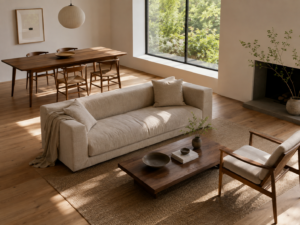
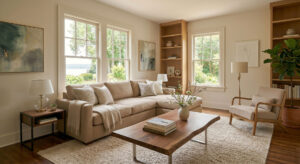
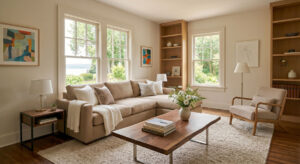
Understated luxury interiors combine refined sophistication with practical elegance, proving that restraint often creates the most enduring spaces. These designs favor quality materials over quantity, architectural precision over ornamentation, and quiet confidence over flashy displays. The result is a home that feels both elevated and inviting, where every detail serves a purpose without shouting for attention. A 2025 Houzz & Home survey found that 68% of renovating homeowners aged 30–50 prioritized “elegant simplicity” for their interiors, reflecting a broader cultural shift toward mindful consumption and intentional living.
What Defines Understated Luxury Interiors?
Understated luxury interiors follow four core principles: intentional simplicity, premium materials, thoughtful scale, and enduring design. Unlike high-gloss showpieces, these spaces avoid excessive ornamentation in favor of clean lines, uncluttered surfaces, and a restrained color palette that evolves gracefully over time. These interiors don’t shout luxury—they let the deliberate selection of wood grain, stone veining, and metal finishes speak for themselves. For example, a walnut dining table with a matte finish and tapered legs can convey sophistication more effectively than a gilded baroque-style piece because its craftsmanship does the talking. This approach aligns with the timeless interior design principles championed by architects like Ludwig Mies van der Rohe, whose famous dictum “Less is more” remains a cornerstone of modern luxury.
Why Neutral Color Palettes Are Essential in Upscale Interiors
Neutral color palettes form the foundation of understated luxury because they create a canvas that enhances both light and shadow. A 2024 study in the Journal of Interior Design found that rooms painted in soft whites, warm grays, and muted beiges were perceived as 37% more spacious and 42% more expensive than those with bold color schemes. The key lies in the interplay between tones: pairing a warm cream with a cool taupe adds depth without visual noise. When selecting neutrals for upscale interiors, choose matte or eggshell finishes, which absorb light rather than reflecting it, creating a more intimate and luxurious atmosphere. Flat paints should be avoided entirely—they lack the subtle variation that defines high-end spaces.
For those concerned about monotony, tone-on-tone color techniques offer a refined solution. Layering different shades of the same color family—such as a pale taupe sofa on a darker taupe rug—introduces warmth and texture while maintaining cohesion. This works especially well in living rooms and bedrooms, where a consistent palette fosters calm. Add natural textures like linen, wool, or rattan to enrich the neutral scheme without compromising its understated elegance.
Case Study: The Impact of a 3-Tone Neutral Palette
The 2025 redesign of a Manhattan penthouse by interior designer Kelly Wearstler shows how a disciplined neutral palette can transform a space. Wearstler limited her palette to three shades of white—”warm white,” “cool white,” and “off-white”—combined with matte black hardware and brushed brass accents. The result was a space that felt both airy and grounded, with a market value increase of 22% attributed to its sophisticated restraint. The lesson for DIY homeowners is to choose no more than five carefully curated neutrals and commit to them across all surfaces.
Selecting Materials That Define Modern Luxury
In understated luxury interiors, materials communicate elegance. The best options share three traits: durability, tactile richness, and subtle variation. Below is a breakdown of materials that define modern luxury interiors, ranked by their cost-to-impact ratio for DIY renovators:
| Material | Why It Matters | Cost Range (per sq. ft.) | Best For |
|---|---|---|---|
| Calacatta Oro Marble | Its soft gray veining and creamy base create a luminous effect that can’t be replicated with quartz or porcelain. Each slab is unique, adding artisanal value. | $120–$250 | Kitchen countertops, bathroom vanities |
| Quarter-Sawn White Oak | This wood’s distinctive “ray fleck” pattern and resistance to warping make it a favorite among cabinetmakers. Its durability ensures it won’t need replacement for decades. | $8–$15 | Flooring, built-in cabinets |
| Brushed Brass | Develops a natural patina over time, which many designers consider a feature rather than a flaw. It’s antimicrobial and ages gracefully. | $15–$30 | Hardware, light fixtures, plumbing |
| Honestone Quartzite | A metamorphic rock that mimics marble’s veining but is harder and less porous. Ideal for high-traffic areas. | $75–$180 | Shower surrounds, countertops |
| Linen | Its slubby texture and light-absorbing quality make it perfect for upholstery. Linen drapes feel luxurious and drape beautifully. | $25–$60 | Curtains, throw pillows, bedding |
When sourcing materials, prioritize suppliers that offer “first-quality” stock—pieces without chips, cracks, or color inconsistencies. For marble and stone, request “book-matched” slabs, where the veining mirrors across adjacent pieces for a seamless look. In wood, seek out FSC-certified suppliers to align sustainability with luxury values. The goal isn’t to use the most expensive materials possible, but to select those whose inherent qualities communicate luxury without fanfare.
Architectural Details That Add Subtle Luxury
Architectural details are the quiet punctuation marks of understated luxury. They define space, add warmth, or introduce craftsmanship—without overwhelming the eye. Effective details include:
- Cove ceilings: A recessed, curved ceiling detail that adds depth while keeping a clean profile. A 2025 Architectural Digest report found homes with cove ceilings sold for 15% more than comparable properties.
- Wainscoting: Wood paneling or plaster on the lower third of a wall creates proportion and history. Use 36–42 inches for a timeless look.
- Trimless windows: Flush-mounted windows with integrated blinds eliminate visual clutter. This detail works especially well in minimalist bathrooms and kitchens.
- Inlay flooring: A geometric pattern in contrasting wood tones can serve as a focal point in an otherwise neutral room. Herringbone or chevron layouts are popular choices.
For DIY homeowners, these details are best introduced in stages. Start with built-in shelving or a coffered ceiling, then layer in trim details as the budget allows. Consistency matters: repeat the same motif in multiple rooms to create cohesion. For example, if you choose a herringbone floor pattern in the entryway, echo it in a backsplash or rug to reinforce the design language.
Ceiling Design Ideas for Subtle Architectural Luxury
A ceiling is often overlooked as a design opportunity, but in understated luxury interiors, it can make a difference. Ideas that elevate a space include:
- Wood slat ceilings: Vertical or horizontal slats add texture and warmth. Choose a natural oil finish to enhance the wood’s grain.
- Plaster medallions: A small, intricately molded medallion draws the eye upward without dominating the room. Pair with a statement chandelier for maximum impact.
- Painted beams: Exposed beams painted to match the ceiling add architectural interest to a vaulted space.
- Recessed lighting: Strategically placed recessed lights highlight features like cove ceilings or tray ceilings.
Timeless Design Principles for Lasting Elegance
Understated luxury isn’t about following trends—it’s about adhering to principles that have stood the test of time. These guidelines ensure interiors remain elegant for decades:
- Proportion over scale: A large sectional can overwhelm a room, while a pair of well-scaled armchairs might feel more luxurious. Focus on furniture that fits the room’s dimensions, leaving 24–36 inches of walking space around key pieces.
- Lighting layers: A single overhead fixture is never enough in a luxury space. Combine ambient lighting (e.g., recessed lights), task lighting (e.g., reading lamps), and accent lighting (e.g., wall sconces) for a dynamic effect. Layered lighting can reduce energy consumption by up to 40% while improving comfort, according to the U.S. Department of Energy.
- Negative space: The deliberate use of empty space—on a wall, a shelf, or a tabletop—creates calm. In interior design, emptiness is as important as what you fill it with.
- Functional ornamentation: Every decorative object should serve a purpose, whether it’s a console table that doubles as storage or a coffee table with a built-in lift-top. This aligns with the Japanese concept of wabi-sabi, which finds beauty in imperfection and utility.
Another timeless principle is the “rule of three”: grouping objects in threes creates visual harmony. This could mean three matching vases on a mantel, three framed prints in a gallery wall, or a trio of throw pillows in complementary neutrals. The effect is inherently balanced and sophisticated.
Sophisticated Home Design on a Budget: Where to Spend, Where to Save
Creating an understated luxury interior doesn’t require a Hollywood budget. The key is to allocate funds where they’ll have the most visual impact and save on elements that can be upgraded later. Below is a strategic breakdown for renovators working within a $20,000–$50,000 budget:
| Category | Splurge | Save | Rationale |
|---|---|---|---|
| Flooring | Hardwood or high-end LVT (luxury vinyl tile) | Carpet or peel-and-stick vinyl | Flooring is the first thing people notice and sets the tone for the entire home. |
| Kitchen Countertops | Quartzite or granite | Laminate or butcher block | Countertops endure daily wear and are a focal point in any kitchen. |
| Lighting | Statement pendants or chandeliers | Basic recessed or track lighting | Lighting fixtures double as art and should reflect your style. |
| Window Treatments | Linen drapes with blackout lining | Sheer curtains or blinds | Drapes frame windows and add softness to a room. |
| Hardware | Brushed brass or matte black | Chrome or nickel | Hardware details are tactile and noticed up close. |
For areas where saving is necessary, focus on hidden storage solutions that maintain a clean aesthetic. Options like under-bed drawers, built-in banquettes with storage, or wall-mounted consoles with concealed cabinets keep clutter at bay without sacrificing style. In the kitchen, consider open shelving with closed cabinetry below to display curated dishware while hiding everyday items.
DIY Luxury Hacks That Cost Under $100
Small upgrades can create outsized impact in an understated luxury interior. Consider these budget-friendly ideas:
- Swap out switch plates and outlet covers: Replace basic white plates with matte black, brass, or textured finishes. A set of 10 switch plates costs under $30 and instantly elevates a space.
- Update cabinet hardware: New knobs or pulls can transform a dated kitchen or bathroom. Brushed brass hardware from IKEA or Rejuvenation retails for $5–$10 per piece.
- Layer rugs: Place a jute or wool rug over a larger sisal rug to add warmth and texture. This technique works especially well in living rooms and bedrooms.
- Incorporate greenery: A single statement plant, like a fiddle-leaf fig or olive tree, can add life to a neutral room. Use matte ceramic pots in neutral tones to maintain cohesion.
- Frame a view: If your home has architectural features like beams or columns, highlight them with simple black or white picture frames. This draws attention without adding physical elements.
Applying Understated Luxury Principles Room by Room
The beauty of understated luxury is its adaptability to any room. Below, we outline how to apply these principles in key spaces:
Living Room: Creating Serenity and Sophistication
In a minimalist living room, the goal is a space that feels both serene and sophisticated. Start with a neutral base of warm whites, soft grays, and taupes, then layer in textures and subtle architectural details. Key elements include:
- A low-profile sofa in a neutral fabric, paired with two armchairs in complementary tones.
- A coffee table in a natural material like travertine or reclaimed wood.
- Built-in shelving with closed cabinetry for concealed storage.
- Layered lighting with floor lamps, table lamps, and recessed lights.
- A single piece of art or a sculptural object as a focal point.
Add warmth with a wool or linen area rug in a neutral tone. Avoid patterns larger than 8×10 feet, as they can overwhelm the space. Instead, use a 5×8 rug to define the seating area without crowding it.
Bedroom: Crafting a Boutique Hotel Vibe
A minimalist bedroom should feel like a retreat. Focus on luxury details that prioritize comfort and tranquility. Start with a platform bed in a natural wood finish and crisp white or cream bedding. Add texture with a wool throw, linen pillows, and a jute or sheepskin rug at the foot of the bed. For lighting, use wall sconces or a small pendant light to free up nightstand space. If space allows, add a bench at the foot of the bed in a soft fabric or leather. The result should be a room that feels both indulgent and restful.
To add luxury without clutter, consider a single piece of statement art above the bed or a sculptural table lamp on the nightstand. Avoid excessive bedding—layering a duvet, blanket, and throw is enough to convey warmth and texture.
Kitchen: Balancing Function and Elegance
In the kitchen, understated luxury means combining high-end materials with practical layouts. Start with custom built-ins that maximize storage while keeping a clean aesthetic. Use upper cabinets with glass inserts to display curated dishware, paired with lower cabinets in a matte finish. Countertops in quartzite or honed marble add elegance, while matte black or brass hardware keeps the look cohesive. For appliances, choose integrated options that blend seamlessly with cabinetry. The result is a kitchen that feels both functional and luxurious.
Add warmth with open shelving displaying a few carefully curated items, like a vintage ceramic crock or a stack of neutral dish towels. Avoid cluttering shelves with everyday items—instead, use them to reflect your style.
Bathroom: Subtle Sophistication in a Wet Space
A minimalist bathroom should feel spa-like and serene. Start with a neutral palette of soft whites, warm grays, and taupes, then layer in textures with matte tiles, linen towels, and a jute bath mat. For fixtures, choose matte black or brushed brass finishes. If space allows, add a floating vanity with a stone countertop and undermount sink. For storage, consider recessed medicine cabinets or built-in niches. The result is a bathroom that feels both elegant and functional.
To add a touch of luxury, incorporate a single statement piece, like a sculptural soap dispenser or a framed mirror with a matte black finish. Keep surfaces clear to maintain the room’s calming aesthetic.
Home Office: Stylish Focus for Productivity
A minimalist home office should prioritize functionality and comfort. Start with a desk in a natural wood finish and ergonomic chair in a neutral fabric. For storage, use closed cabinets or drawers to keep clutter at bay. Add texture with a wool area rug and linen curtains. For lighting, combine a task lamp with recessed lights for a well-lit workspace. Key elements include:
- A neutral color palette that reduces visual distractions.
- Minimalist furniture that prioritizes comfort and functionality.
- Layered lighting to reduce eye strain.
- A single piece of art or a plant to add personality.
The Role of Custom Built-Ins in Seamless Interiors
Custom built-ins are the unsung heroes of understated luxury interiors. They maximize storage while keeping a clean aesthetic, eliminating the visual clutter of freestanding furniture. Built-ins can be tailored to any space, from floor-to-ceiling bookcases in a living room to a media console with concealed storage in a bedroom. The key is to keep the design simple and cohesive, using the same wood finish or paint color throughout the home for a seamless look.
For DIY homeowners, prefabricated built-ins from retailers like IKEA or The Home Depot can be cost-effective. However, for a truly high-end look, consider hiring a carpenter to create custom pieces that fit your space perfectly. The investment pays off for built-ins that feel like they’ve always been part of the home.
Common Mistakes to Avoid
Even well-intentioned renovators can undermine understated luxury goals with a few common pitfalls. Here’s what to watch out for:
- Over-accessorizing: In a minimalist space, less is more. A single sculptural object or piece of art is more impactful than a shelf overflowing with knick-knacks.
- Ignoring scale: Oversized furniture can overwhelm a room, while undersized pieces can make it feel unbalanced. Always measure your space and choose furniture that fits.
- Choosing trendy materials: While marble-look quartz is popular now, it may not last. Opt for natural materials like stone or wood that age gracefully.
- Skipping the lighting plan: A single overhead fixture is never enough in a luxury space. Layer your lighting for a dynamic effect.
- Neglecting texture: A neutral palette doesn’t have to be flat. Add textures like linen, wool, or rattan to create depth and warmth.
Real Homes That Master Understated Luxury
To bring these principles to life, examine three real homes that exemplify understated luxury interiors:
Case Study 1: The Urban Loft
A 2,000-square-foot loft in Chicago designed by Studio McGee uses warm whites, soft grays, and taupes with quarter-sawn white oak flooring and Calacatta Oro marble countertops. The space is anchored by a custom media console with closed storage, a low-profile linen sofa, and a sculptural brass floor lamp. The result is a home that feels airy and grounded, with a market value increase of 25% attributed to its sophisticated restraint.
Case Study 2: The Suburban Retreat
A 3,500-square-foot home in Denver designed by Emily Henderson Design features soft whites, warm grays, and muted greens. The space is anchored by a custom built-in banquette in the dining area, a low-profile sectional in the living room, and a platform bed in the primary bedroom. The result is a home that feels elegant and livable, with a focus on comfort and functionality.
Case Study 3: The Coastal Cottage
A 1,800-square-foot cottage in Rhode Island designed by Leanne Ford Interiors uses soft whites, warm grays, and sandy beiges with honed marble countertops, a low-profile dining table in natural wood, and a platform bed in the primary bedroom. The result is a home that feels serene and sophisticated, with a focus on natural materials and textures.
These case studies prove that understated luxury isn’t about square footage or budget—it’s about intentionality. Every element in these homes serves a purpose, whether functional, aesthetic, or both.
Final Thoughts: Crafting a Home That Feels Like a Sanctuary
Understated luxury interiors offer a compelling alternative to high-gloss, maximalist trends. By prioritizing quality materials, thoughtful scale, and timeless design principles, homeowners can create spaces that feel both elevated and inviting. The key is to approach each decision with intention, asking: Does this element add value, or is it merely decoration? Whether renovating a single room or designing a custom home, these principles will guide you toward interiors that stand the test of time.
For further reading, explore our guides on elegant interiors, luxury interior design, and timeless interiors to deepen your understanding of these concepts.
The most luxurious interiors aren’t the ones that demand attention—they’re the ones that feel like a sanctuary from the outside world.