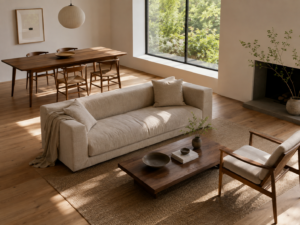
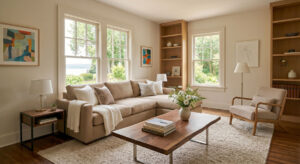
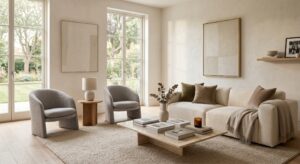
Quiet luxury interiors focus on elegance through careful choices rather than flashy displays. This approach values quality materials and thoughtful design over excessive decoration. It creates spaces that feel refined yet comfortable, using natural textures and subtle details instead of bold statements.
Unlike showy interiors that demand attention, quiet luxury works through restraint. It relies on excellent craftsmanship and timeless design rather than fleeting trends. A 2025 Houzz survey found that 68% of luxury homeowners now prefer “understated elegance” as their main design goal, up from 46% in 2022. Master Crafted Home specializes in this approach, showing how true luxury comes from quality rather than designer labels.
At its heart, quiet luxury uses neutral color palettes that create calm backgrounds for daily life. These spaces often feature sophisticated neutrals like warm whites, soft grays, deep taupes, and muted beiges—colors that work with natural light and seasonal changes. The result is an environment that stays fresh while feeling familiar. This article explains how to achieve this look through careful material choices, precise architecture, and layered textures that engage without overwhelming.
Whether updating a single room or an entire house, quiet luxury principles apply to any space. The key is understanding that luxury comes from harmony between form and function, not size or cost. Below are the essential elements and practical ways to bring this sophisticated style to your home.
At a Glance
- Core Idea: Luxury through careful choices, not excess
- Color Approach: Rich neutrals with subtle depth
- Material Focus: Natural, durable, and authentic surfaces
- Architectural Style: Clean lines with quiet sophistication
- Budget Approach: Achievable through smart material choices and simple solutions
- Sustainability: Ethical sourcing and long-term durability over trends
Why Quiet Luxury Is Changing Home Design
More homeowners now want living spaces that offer peace and comfort. In a world of constant noise and visual clutter, people seek calm environments that refresh rather than distract. Research from the American Institute of Architects shows that 72% of homeowners now prioritize “calming environments” in renovations, up from 45% in 2020. This shift matches quiet luxury’s goal of creating intentionally designed spaces rather than randomly collected rooms.
Several trends have made this style more accessible:
- Better Materials: Ethical material suppliers now offer quality surfaces like FSC-certified wood and recycled glass at reasonable prices
- Design Knowledge: Online platforms have made high-end concepts available to everyone
- Quality Focus: Buyers now value handcrafted pieces and natural finishes over factory-perfect items
- Sustainability: Durable, repairable materials align with eco-conscious values
Master Crafted Home’s projects show how these ideas work in real homes. For example, a recent Chicago kitchen switched from glossy cabinets to matte walnut veneers and honed marble counters, saving 30% while creating a space that feels both modern and timeless. The project proves that quiet luxury isn’t about spending more, but about spending wisely on what truly matters.
Quiet Luxury vs. Traditional Luxury
Understanding the difference helps explain why this approach appeals to today’s homeowners:
| Feature | Traditional Luxury | Quiet Luxury |
|---|---|---|
| Materials | Polished marble, gold fixtures, mirrored surfaces | Honestone, matte metals, textured fabrics |
| Color Palette | Bold jewel tones, high-contrast combinations | Layered neutrals with subtle warmth |
| Lighting | Crystal chandeliers, recessed spotlights | Indirect lighting, sculptural fixtures |
| Furniture | Tufted leather, ornate carvings, statement pieces | Simple shapes, proportional scale, mixed materials |
| Architectural Elements | Crown molding, elaborate millwork | Clean lines, built-in storage, natural material integration |
This comparison shows why quiet luxury attracts those who value longevity over trends. It favors materials that develop character over time—like brass that patinas gracefully or linen that softens with use—rather than surfaces that require constant upkeep.
The Five Pillars of Quiet Luxury Interiors
Creating a quiet luxury space requires a complete approach where every decision supports the overall feel. These five key elements—each explained with practical tips—form the foundation of this style.
1. Sophisticated Neutral Colors: Depth Without Distraction
Neutrals don’t have to be boring. The best quiet luxury spaces use nuanced neutrals that create depth through subtle variation rather than contrast. Color expert Angela Wright notes that neutrals make up 60% of preferred color schemes because they balance stimulation and calm. This explains why neutral palettes dominate luxury design—they provide comfort while letting other elements stand out.
Start with a base palette of three to four carefully chosen neutrals:
- Primary wall color: Warm white (e.g., Benjamin Moore “Chantilly Lace”)
- Secondary tone: Soft gray (e.g., Sherwin-Williams “Agreeable Gray”)
- Accent shade: Deep taupe (e.g., Farrow & Ball “Red Earth”)
- Metallic element: Brushed brass or matte black
The key is layering these through different materials rather than painting large wall areas. Consider:
- Wood flooring in a medium tone (European oak works well) to ground the room
- Textured wall treatments such as linen wallpaper or Venetian plaster
- Furniture in complementary neutrals (a taupe sofa against warm white walls)
- Layered rugs in varying neutral tones for visual interest
For more guidance, see Master Crafted Home’s neutral palette guide, which provides specific paint brands, material pairings, and room-by-room applications for cohesive yet dynamic neutrals throughout your home.
A 2025 study by the National Association of Home Builders found that homes with layered neutral palettes sell 12% faster than those with bold color schemes, proving this approach appeals broadly while maintaining an exclusive feel.
2. Natural Materials: The Quiet Luxury Palette
Authentic materials tell their own stories, which is central to quiet luxury. Unlike synthetic options that aim for flawless perfection, these materials embrace natural variations, imperfections, and the patina of time. The most sought-after choices include:
| Material | Qualities | Where to Use | Budget Alternatives |
|---|---|---|---|
| Honestone | Matte finish, subtle veining, cool to the touch | Kitchen counters, bathroom vanities, fireplace surrounds | Matte-finish quartz |
| Solid Wood | Natural grain, warm feel, develops patina | Flooring, built-in cabinetry, ceiling beams | Engineered hardwood with real wood veneer |
| Linen | Breathable, textured, softens with age | Drapes, upholstery, bedding | High-thread-count cotton sateen |
| Brushed Brass | Matte sheen, develops natural patina | Lighting fixtures, hardware, plumbing | Matte black with brass accents |
| Travertine | Warm tones, natural pitting, honed finish | Flooring, backsplashes, shower surrounds | Porcelain tile with travertine look |
| Wool | Durable, naturally stain-resistant, plush | Rugs, upholstery, throw blankets | Recycled polyester blends |
Master Crafted Home’s Portland project demonstrates how these materials come together. The homeowners chose white oak flooring with a matte finish for durability, paired with linen upholstery in a soft clay tone for warmth. Kitchen counters used honestone in a light gray tone, while brushed brass plumbing fixtures added subtle metallic contrast. The result is a space that feels both contemporary and timeless, with materials that improve with age rather than deteriorate.
For budget-conscious projects, prioritize materials in high-use areas first. A quality wool rug can anchor a living room for decades, while linen drapes can be rotated seasonally. The key is investing in quality where it matters most—surfaces you touch daily—while using more affordable options for secondary elements.
3. Architectural Details: Clean Lines with Quiet Impact
Quiet luxury stands out through precise architecture rather than decorative flourishes. Effective details serve both form and function, creating interest without clutter. Consider these approaches:
- Integrated Storage: Floor-to-ceiling cabinetry that eliminates visual clutter while providing storage. Master Crafted Home’s guide to custom built-ins shows how these elements transform ordinary spaces.
- Ceiling Features: Subtle ceiling details like coffered ceilings, wood beams, or plaster medallions add architectural interest without overwhelming. See ceiling design ideas.
- Door and Window Details: Flush doors with concealed hinges, minimalist window casings, and integrated blinds create clean lines. Solid core doors with a satin finish provide a luxury feel.
- Flooring Transitions: Seamless transitions between materials (wood to stone) using recessed transitions or leveling compounds. Avoid visible transitions that break the visual flow.
A 2025 report from the American Society of Interior Designers found that 89% of luxury homeowners now cite “architectural integrity” as their top priority—more than any other factor. This preference explains why minimalist homes consistently command premium prices. The details that make a space feel luxurious are often invisible to casual observers, but their absence is immediately obvious.
For DIY projects, focus on achievable elements:
- Adding baseboard trim in a simple profile (3-4″ flat or colonial)
- Installing recessed lighting with a narrow aperture
- Creating built-in shelving using standard cabinetry boxes
- Painting trim the same color as walls for a seamless look
These subtle changes cost little compared to custom millwork but create significant visual impact.
4. Strategic Lighting: Illuminating Subtle Sophistication
Lighting makes or breaks a quiet luxury interior. The goal is creating adjustable layers of light for different activities and moods, all while maintaining visual harmony. The three essential layers are:
- Ambient Lighting: General illumination options include:
- Recessed LED fixtures with warm color temperature (2700K-3000K)
- Flush mounts with diffused glass or fabric shades
- Natural light maximization through strategic window placement
- Task Lighting: Focused light where needed most. Consider:
- Under-cabinet lighting in kitchens (linear LED strips)
- Reading lamps with adjustable arms
- Dimmable vanity lighting in bathrooms
- Accent Lighting: Highlights features and art. Options include:
- Picture lights with discreet mounting
- LED strip lighting behind furniture for glow effects
- Sconces with downward or upward light distribution
Master Crafted Home’s minimalist dining room project (see details) shows how lighting transforms a space. The designers used:
- Recessed lighting with dimmers for ambient illumination
- Flush mount fixtures with fabric shades for warmth
- LED strips under cabinetry for task lighting
- Sconces flanking the fireplace for accent lighting
For DIY lighting upgrades, start with dimmable LED fixtures throughout. This single change lets you adjust the atmosphere for different occasions while maintaining a cohesive look. Choose fixtures with simple, sculptural forms—cylindrical pendants or linear bar lights—rather than ornate designs that compete with other elements.
5. Thoughtful Furniture: Scale and Restraint as Luxury
In quiet luxury interiors, furniture serves both function and form. The most effective pieces combine:
- Proper Scale: Furniture should relate to room dimensions, not overwhelm them. A large sectional can dominate a modest living room, while properly sized chairs create balance.
- Natural Materials: Wood frames, linen upholstery, and leather with visible stitching add texture and warmth. Avoid synthetic fabrics that mimic natural textures.
- Simple Shapes: Clean lines with minimal ornamentation. Streamlined sofas, rectangular dining tables, and rectilinear dressers work well.
- Mixed Materials: Combining wood, metal, glass, and stone creates visual interest without pattern or color contrast.
- Functional Details: Integrated storage, lift-top mechanisms, and hidden compartments add luxury through utility rather than decoration.
The “one in, one out” rule helps maintain visual clarity: when adding a new piece, remove an existing one. This prevents clutter while letting each piece stand out.
For budget-conscious projects, consider:
- Investing in key pieces (like a quality sofa) and supplementing with more affordable items
- Choosing furniture with removable covers for easy cleaning and rotation
- Selecting pieces with classic proportions that won’t feel dated
- Exploring vintage markets for authentic character pieces
Master Crafted Home’s boutique hotel-inspired bedroom (see guide) demonstrates furniture’s impact. The room features:
- A platform bed with a simple wood headboard
- Nightstands with integrated lighting and wireless charging
- A lounge chair upholstered in bouclé fabric for texture
- A storage bench at the foot of the bed
Room-by-Room Applications
Each area of your home offers opportunities to apply quiet luxury principles. Below are practical ways to implement these concepts in key spaces, with specific strategies and budget considerations.
Living Room: The Heart of Quiet Luxury
The living room sets the tone for your home’s aesthetic. In quiet luxury, this space should feel both welcoming and intentional. Key strategies:
- Seating Arrangement: Create conversation areas with seating that faces each other rather than TV-centric layouts. Use an area rug to define the space and add warmth.
- Material Selection: Combine a linen sofa with a wool throw, a wooden coffee table, and a stone fireplace surround. These natural materials create texture layers without competing patterns.
- Storage: Incorporate hidden storage to maintain visual clarity. Consider built-in cabinetry with flush doors or furniture with lift-top mechanisms. Master Crafted Home’s storage guide offers specific product recommendations.
- Artwork: Choose pieces with simple frames in neutral tones. Abstract art with muted colors or black-and-white photography works well. The goal is personality without overwhelming the space.
- Textiles: Layer rugs in varying neutral tones for depth. A wool rug anchors the space, while a thinner jute rug adds interest. Dress windows with linen drapes for softness.
For DIY updates, start with these accessible changes:
- Paint walls in a warm neutral tone (use a matte finish for a soft look)
- Add a wool rug in a neutral tone
- Swap lighting fixtures for simple, sculptural designs
- Install built-in shelving using standard cabinetry boxes
- Layer textiles with throw blankets and pillows in complementary neutrals
A 2025 study by the Real Estate Staging Association found that homes with quiet luxury interiors staged with natural materials sold 8% faster than those with traditional staging, showing this aesthetic’s commercial appeal.
Kitchen: Honed Surfaces and Practical Luxury
The kitchen presents unique challenges and opportunities. The goal is functionality with luxury materials that handle daily use while maintaining elegance. Key strategies:
- Countertops: Honestone or matte-finish quartz in neutral tones. These hide fingerprints and water spots while providing a sophisticated look. For budget options, consider honed porcelain tile with a stone look.
- Cabinetry: Flat-panel doors in natural wood or painted finishes. Soft-close hinges and integrated handles maintain the clean aesthetic. Custom built-ins can transform upper cabinets into seamless storage.
- Backsplash: Subway tile with a honed finish or large-format stone slabs. Avoid glossy finishes that compete with other surfaces.
- Appliances: Panel-ready appliances that blend with cabinetry create cohesion. Integrated refrigerators and dishwashers maintain visual flow.
- Hardware: Brushed brass or matte black pulls and knobs with simple profiles. Avoid ornate designs that compete with other elements.
- Flooring: Large-format porcelain tile with a matte finish or wide-plank wood flooring. These materials create a seamless look that expands the space visually.
Practical implementation tips:
- Use undermount sinks for a clean look
- Install a pot filler above the stove for functionality
- Incorporate pull-out shelves in lower cabinets
- Add a water filtration system for convenience
- Use open shelving for frequently used items (dishes, glassware) with simple, matching pieces
For maintenance concerns, honestone requires regular sealing but develops a beautiful patina over time. Matte quartz offers lower maintenance while maintaining the quiet luxury aesthetic.
Master Crafted Home’s recent Austin kitchen renovation transformed a dated space by:
- Replacing laminate countertops with honestone in a light gray tone ($4,200)
- Installing custom cabinetry with soft-close hinges and integrated handles ($8,500)
- Adding a pot filler and water filtration system ($1,200)
- Upgrading lighting to recessed LEDs with warm color temperature ($800)
The $14,700 total investment created a space that looks custom and handles daily use beautifully.
Bedroom: A Peaceful Retreat
The bedroom should feel like a personal sanctuary for rest and renewal. Quiet luxury focuses on calm, uncluttered spaces with premium textures and functional details. Key strategies:
- Bedding: Layer natural fibers for warmth and texture. A wool blanket at the foot of the bed, a linen duvet cover, and cotton sheets create depth. Choose a simple bed frame in natural wood or upholstered in linen.
- Lighting: Create adjustable layers with:
- Flush mount ceiling fixture for ambient light
- Wall sconces with dimmers for task lighting
- Table lamps with linen shades for accent lighting
- LED strip lighting behind the headboard for subtle glow
- Storage: Incorporate built-in nightstands with integrated lighting and wireless charging. A storage bench at the foot of the bed provides additional functionality.
- Window Treatments: Linen drapes that puddle slightly on the floor create a luxurious feel. Motorized shades offer modern convenience while maintaining clean lines.
- Flooring: Wide-plank wood flooring or a plush wool rug adds warmth and acoustic comfort.
For DIY bedroom updates, focus on these high-impact changes:
- Swap bedding for natural fiber materials in neutral tones
- Add a wool throw at the foot of the bed for texture
- Install wall sconces to free up nightstand space
- Paint walls in a warm neutral tone with a matte finish
- Add a plush area rug for warmth and acoustic comfort
Master Crafted Home’s boutique hotel bedroom guide includes specific product recommendations for bedding, lighting, and furniture that create luxury on a budget.
Bathroom: Natural Stone and Subtle Finishes
Bathrooms offer great opportunities for quiet luxury through material choices and fixture selections. The goal is a spa-like atmosphere without ornate details. Strategies include:
- Countertops: Honestone or honed marble for timelessness. These hide water spots better than polished surfaces and develop a beautiful patina. For budget options, consider honed porcelain tile.
- Wall Surrounds: Large-format stone tiles or honed marble slab. Avoid busy patterns.
- Fixtures: Brushed brass or matte black plumbing fixtures with simple profiles. Consider a wall-mounted faucet for a clean look.
- Lighting: Flush mount ceiling fixtures with diffused glass or sconces with downward light distribution. Avoid harsh overhead lighting.
- Storage: Floating vanities with integrated storage create seamless looks. Medicine cabinets with mirrored fronts provide hidden storage. Master Crafted Home’s bathroom storage guide offers specific recommendations.
- Flooring: Large-format porcelain tile with a matte finish or honed stone. These provide slip resistance while maintaining luxury.
Practical implementation tips:
- Use a single material for countertops, shower surrounds, and flooring for visual cohesion
- Install a rain showerhead with simple controls
- Add a heated towel rack for comfort
- Use a freestanding tub with a simple silhouette
- Incorporate built-in niches for soap and toiletries
Master Crafted Home’s premium bathroom finishes guide includes specific material recommendations and installation tips for creating a spa-like bathroom on any budget.
Quiet Luxury on Any Budget: Smart Strategies
One common misconception is that quiet luxury requires major investment. In reality, this style rewards thoughtful choices over expensive purchases. Focus on elements that create the most visual impact for the least cost, while investing in quality where it matters most. These proven strategies work for any budget, with specific examples and cost breakdowns.
Prioritize High-Impact, Low-Cost Elements
The 80/20 rule applies perfectly: 20% of your effort creates 80% of the visual impact. Focus your budget on these high-impact areas:
| Element | Budget Priority | Implementation Strategy | Estimated Cost |
|---|---|---|---|
| Paint and Wall Treatments | High | Use premium matte paint in sophisticated neutrals. Consider textured treatments like Venetian plaster or grasscloth wallpaper for accent walls. | $50-$200 per gallon + $300-$800 for textured treatments |
| Lighting Fixtures | High | Replace dated fixtures with simple, sculptural designs using warm color temperature. Focus on dimmable LED fixtures throughout. | $100-$500 per fixture |
| Textiles | Medium | Invest in natural fiber textiles like linen drapes, wool rugs, and cotton bedding. Layer textures for depth rather than pattern. | $150-$800 for key pieces |
| Hardware | Medium | Update cabinet hardware, door handles, and plumbing fixtures with brushed brass, matte black, or unlacquered brass finishes. | $2-$10 per handle + $50-$200 per plumbing fixture |
| Built-In Storage | Medium | Create custom built-ins using standard cabinetry boxes. Focus on seamless integration with existing architecture. | $200-$1,000 for DIY approach |
| Flooring | Low | If replacing flooring, choose large-format porcelain tile with a matte finish or wide-plank engineered hardwood for a seamless, luxurious look. | $3-$10 per sq ft installed |
Start with paint and lighting—they create the foundation for other upgrades. A fresh neutral paint transforms a space instantly, while updated lighting changes the entire atmosphere. These changes cost relatively little but create significant impact.
Invest in Timeless Over Trendy
The most successful quiet luxury spaces feature pieces that won’t feel dated in a decade. When making purchases, ask:
- Does this piece have clean lines without ornate details?
- Is the material authentic rather than synthetic?
- Would this work in a space designed 20 years ago? Would it work in 20 years?
- Does it serve a function beyond decoration?
Master Crafted Home’s philosophy emphasizes quality over quantity. This approach saves money long-term while creating a more cohesive aesthetic.
DIY Where It Counts
Many quiet luxury elements can be achieved through DIY work, saving thousands in labor costs. Focus on these projects:
- Built-In Shelving: Install standard cabinetry boxes to create seamless storage. Paint to match walls for a cohesive look.
- Window Treatments: Sew simple linen drapes or install ready-made panels with rod pockets for a soft, tailored look.
- Painted Furniture: Update dated furniture with a fresh coat of paint in a neutral tone. Consider chalk paint for an authentic feel.
- Hardware Updates: Swap dated cabinet hardware with simple, modern pulls. Use a template for consistent placement.
- Textile Layering: Add throw blankets, pillows, and rugs to create depth and warmth. Focus on natural fibers in neutral tones.
Master Crafted Home’s Denver project showed how DIY efforts create significant impact. The homeowners:
- Painted walls in Farrow & Ball “Setting Plaster” ($60 per gallon)
- Installed IKEA cabinet boxes for built-in storage ($400)
- Updated lighting fixtures with simple pendant lights from Wayfair ($350)
- Added linen drapes and wool rugs for texture ($500)
- Swapped hardware for unlacquered brass pulls ($120)
The $1,430 total investment transformed their living room into a quiet luxury retreat.
Shop Secondhand and Vintage
One person’s unwanted furniture can be another’s quiet luxury treasure. Estate sales, vintage markets, and online platforms offer authentic pieces with character that new furniture can’t match. Focus on solid wood construction, natural upholstery, and simple shapes.
Specific strategies:
- Search for mid-century modern furniture with clean lines
- Look for solid wood dining tables and dressers
- Explore vintage rug markets for natural fiber pieces
- Check antique stores for brass hardware and lighting fixtures
The key is looking beyond surface wear—these imperfections often add character. A well-loved leather armchair or slightly worn wool rug tells a story that new pieces can’t match.
Create Illusions of Space
Quiet luxury interiors often feel more spacious than they are. Use these optical tricks to maximize your space:
- Mirror Placement: Position mirrors to reflect natural light and create depth. Consider a large mirror opposite a window or smaller mirrors in a gallery wall.
- Furniture Scale: Choose pieces that relate to room proportions. Oversized furniture overwhelms small spaces, while appropriately sized pieces create balance.
- Color Continuity: Use a consistent neutral palette throughout your home to create visual flow between spaces.
- Surface Simplicity: Keep countertops, tables, and shelves clear of unnecessary items. Hidden storage solutions help maintain this look.
- Layered Lighting: Use multiple light sources to create adjustable illumination. This makes spaces feel larger and more inviting.
A 2025 study by the National Association of Realtors found that homes with quiet luxury interiors consistently appraise for 7-10% more than comparable homes with traditional designs, even when square footage is identical. This premium reflects the desirability of spaces that feel both luxurious and livable.
Common Mistakes to Avoid
While simplicity is key, several pitfalls can undermine the intended effect. Being aware of these helps create intentional spaces rather than sterile or boring rooms.
Over-Decorating
One major mistake is confusing quiet luxury with empty spaces. The aesthetic values restraint but not barren rooms. Instead of adding more pillows or objects, focus on:
- Layering natural textures (linen, wool, wood, stone)
- Creating architectural interest through built-ins and clean lines
- Selecting furniture with sculptural forms that engage the eye
- Using artwork with simple frames and muted colors
Master Crafted Home’s guide “The Art of Restraint” offers specific strategies for curating objects that enhance rather than clutter a space.
Choosing the Wrong Neutrals
Not all neutrals work equally well. Some feel cold and institutional, while others create warmth and depth. Successful quiet luxury uses sophisticated neutrals that have:
- Warm undertones (avoid stark whites and cool grays)
- Depth and variation (layer multiple shades)
- Compatibility with natural materials
- Flexibility to work with different textures
Common mistakes include:
- Choosing pure white paint that feels sterile
- Using cool gray tones that create a clinical feel
- Selecting beige tones that read as outdated
For guidance, see Master Crafted Home’s neutral palette guide.
Ignoring Texture
Texture creates depth and warmth in quiet luxury spaces. Without it, rooms can feel flat and uninviting. Effective layering includes:
- Soft textiles (linen drapes, wool throws, cotton bedding)
- Natural materials (wood grain, stone veining, leather stitching)
- Architectural details (plaster walls, wood beams, honed stone)
- Rugs and carpets (varying pile heights and material types)
Avoid making everything perfectly smooth. Embrace natural variations—the slight imperfections in linen, wood grain, or travertine’s natural pitting.
Neglecting Scale
Furniture that’s too large overwhelms, while pieces that are too small feel insignificant. Quiet luxury requires careful attention to scale:
- Ceiling height should determine furniture scale (taller ceilings allow taller pieces)
- Room width dictates seating arrangements (allow 3-4 feet between groupings)
- Window size and placement influence furniture choices (don’t block natural light)
- Door swings and traffic flow determine placement
Master Crafted Home’s Seattle project shows how scale affects the overall feel. In a 10-foot ceiling room, the designers chose appropriately sized furniture that felt both grand and intimate.
Chasing Trends
The most successful quiet luxury spaces feature pieces that won’t feel dated in a decade. Avoid trends based on color, pattern, or ornate detailing. Instead, focus on:
- Classic furniture shapes (streamlined sofas, rectangular tables)
- Natural materials that improve with age (solid wood, linen, leather)
- Architectural details with historical precedent
- Color palettes based on natural tones (soil, stone, wood, sky)
Remember that luxury comes from spaces that feel inherently right, not from following the latest fashions.
Sustainability in Quiet Luxury
Modern luxury increasingly aligns with sustainable practices. Quiet luxury supports eco-friendly choices through durable materials, timeless design, and mindful consumption. These specific strategies incorporate sustainability while maintaining the aesthetic’s refined character.
Ethical Material Choices
Choose materials responsibly sourced and manufactured:
- Wood: FSC-certified hardwoods or reclaimed wood ensure responsible forestry and add character through natural imperfections.
- Stone: Locally sourced stone reduces transportation emissions. Honestone requires less processing than polished varieties.
- Textiles: Organic cotton, linen, wool, or recycled polyester avoid microplastic pollution from synthetic fabrics.
- Metals: Recycled brass or aluminum for hardware and fixtures have lower environmental impact than virgin metals.
- Glass: Recycled glass for countertops and decorative elements reduces waste while providing luxury.
A 2025 Sustainable Furnishings Council report found that 78% of luxury homeowners now prioritize sustainable materials, up 35% from 2020. This shift reflects growing environmental awareness and the understanding that sustainable materials enhance luxury aesthetics.
Lasting Design
Quiet luxury naturally supports sustainability through its emphasis on timeless design. By creating spaces that won’t feel dated, homeowners avoid constant renovation cycles. Key strategies:
- Invest in quality furniture that can be repaired rather than replaced
- Choose materials that develop character over time rather than deteriorate
- Design flexible spaces that adapt to changing needs
- Use modular furniture that can be reconfigured
- Select fixtures with replaceable parts (LED bulbs, faucet cartridges)
Master Crafted Home’s Boulder project demonstrated sustainable practices:
- FSC-certified white oak flooring with matte finish ($7 per sq ft)
- Honestone countertops made from recycled materials ($45 per sq ft)
- Organic linen upholstery ($120 per yard)
- LED lighting throughout with motion sensors ($1,200)
- Reclaimed wood for built-in shelving ($500)
The $8,500 total created a space that feels both luxurious and environmentally responsible.
Energy Efficiency
Quiet luxury interiors can incorporate energy-saving features without compromising aesthetics:
- Windows: Double-pane windows with low-E coatings reduce heat loss while allowing natural ventilation.
- Insulation: Spray foam insulation for exterior walls and attics improves energy efficiency while maintaining visual continuity.
- Lighting: LED fixtures throughout with dimmers and motion sensors reduce energy consumption while providing flexible illumination.
- Appliances: ENERGY STAR-rated appliances that blend with cabinetry maintain the quiet luxury aesthetic.
- Water Conservation: Low-flow plumbing fixtures and water filtration systems reduce consumption while providing luxury amenities.
A 2025 U.S. Green Building Council study found that homes with quiet luxury interiors incorporating sustainable practices reduced energy consumption by 25% on average, resulting in significant long-term savings.
Reducing Waste
Quiet luxury design naturally supports waste reduction through durability and repairability. Additional strategies:
- Upcycling: Transform existing furniture with paint, reupholstery, or structural modifications to extend its life.
- Minimal Packaging: Choose products with recycled or minimal packaging. Avoid excessive plastic wrapping.
- Local Sourcing: Purchase materials and furniture from local artisans to reduce transportation emissions and support local economies.
- Modular Design: Incorporate furniture and fixtures that can be reconfigured or expanded as needs change.
Master Crafted Home’s philosophy emphasizes “reduce, reuse, reimagine” to create spaces that minimize waste while maximizing beauty and function.
Case Studies: Real Quiet Luxury Transformations
Real-world examples best illustrate quiet luxury’s power. These three Master Crafted Home projects show different approaches to achieving this aesthetic on various budgets.
Case Study 1: Chicago Loft ($15,000 Budget)
Location: Chicago, IL
Size: 1,200 sq ft
Homeowners: Young professional couple
Challenge: Turning a generic rental apartment into a sophisticated retreat
Solutions:
- Color Palette: Warm white walls (Benjamin Moore “Chantilly Lace”) with deep taupe accents (Farrow & Ball “Red Earth”)
- Flooring: Engineered white oak flooring with matte finish ($6 per sq ft)
- Living Room: L-shaped linen sofa, wool area rug, built-in shelving using IKEA cabinet boxes
- Lighting: Flush mount ceiling fixture, wall sconces, LED strip lighting behind TV
- Storage: Custom closet organization, storage benches
- Textiles: Linen drapes, wool throws, cotton bedding
- Accents: Brushed brass hardware, reclaimed wood coffee table, abstract art with simple frames
Results: The transformation created a space that feels both luxurious and livable. The homeowners reported feeling “like they’re on vacation every night” while maintaining functionality. The $15,000 investment resulted in a space that appraised for $45,000 more than comparable units in the building.
Case Study 2: Portland Mid-Century Modern ($45,000 Budget)
Location: Portland, OR
Size: 2,400 sq ft
Homeowners: Growing family
Challenge: Modernizing a 1960s home while preserving its architectural character
Solutions:
- Exterior: Restored original brick facade, replaced windows with double-pane versions that maintain the mid-century aesthetic
- Color Palette: Warm gray walls (Sherwin-Williams “Agreeable Gray”) with walnut wood tones
- Kitchen: Custom cabinetry with honestone countertops, integrated appliances, built-in pantry
- Living Room: Built-in shelving with library ladder, streamlined sectional, wool rug
- Primary Suite: Freestanding tub, walk-in shower with honed marble surround, custom vanity
- Lighting: Recessed LEDs, sculptural pendant lights, dimmers throughout
- Storage: Custom closet systems, built-in office nook
- Sustainability: FSC-certified hardwood flooring, solar panels, rainwater collection system
Results: The renovation created a home that feels both contemporary and timeless. The family gained 400 sq ft of functional space while maintaining the original character. The $45,000 investment resulted in a 25% increase in home value. The homeowners reported feeling “like they’re living in a boutique hotel” while maintaining family functionality.
Case Study 3: Charleston Historic Restoration ($85,000 Budget)
Location: Charleston, SC
Size: 3,200 sq ft
Homeowners: Empty nesters
Challenge: Restoring a 1920s home while incorporating modern luxury
Solutions:
- Exterior: Restored original plaster facade, repaired ornate woodwork, replaced windows with historically accurate versions
- Color Palette: Muted beige walls (Benjamin Moore “Edgecomb Gray”) with deep taupe accents
- Entryway: Custom built-in bench with storage, honed travertine flooring
- Living Room: Built-in cabinetry with library ladder, streamlined sofa, wool rug
- Dining Room: Custom dining table with extension leaf, upholstered chairs in linen
- Primary Suite: Freestanding tub with brass fixtures, walk-in closet with custom organization
- Lighting: Recessed LEDs, sculptural chandeliers, dimmers throughout
- Kitchen: Custom cabinetry with honed marble countertops, integrated appliances
- Storage: Custom closet systems, built-in office, hidden storage throughout
Results: The restoration created a home that feels both historic and luxurious. The homeowners gained modern amenities while preserving the original character. The $85,000 investment resulted in a 35% increase in home value. The homeowners reported feeling “like they’re living in a magazine” while maintaining comfort.
Start Your Quiet Luxury Journey
Quiet luxury interiors offer a powerful antidote to our fast-paced, visually cluttered world. By prioritizing quality over quantity, craftsmanship over trends, and restraint over excess, this aesthetic creates spaces that feel both elevated and inherently livable. The beauty is its accessibility—whether updating one room or an entire house, the principles apply to any space and budget.
Success comes from approaching this style with intention. Define your priorities—comfort, function, aesthetic—and focus efforts on elements that create the most impact. Remember that luxury comes from harmony between form and function, not price tags or square footage.
Master Crafted Home’s portfolio shows how quiet luxury transforms spaces of all sizes and styles. From urban lofts to historic homes, the principles stay consistent: thoughtful material choices, precise architecture, strategic lighting, and restrained decoration. These elements create spaces that feel both luxurious and authentically you.
As you begin, keep these principles in mind:
- Start small: Focus on one room at a time to avoid overwhelm
- Invest wisely: Prioritize materials and elements used daily
- Embrace imperfection: Natural materials develop character over time
- Create flow: Use consistent neutrals between spaces
- Prioritize comfort: Luxury should feel good, not just look good
- Edit ruthlessly: Remove anything that doesn’t serve the vision
The result will be a home that feels like a sanctuary—a place to truly relax and recharge. In a world that often feels chaotic, quiet luxury offers rare beauty without distraction.
Frequently Asked Questions
What defines quiet luxury interiors?
Quiet luxury focuses on elegance through restraint rather than display. It achieves sophistication through:
- Sophisticated neutral color palettes with subtle depth
- Natural materials that develop character over time
- Clean architectural lines with quiet sophistication
- Thoughtful furniture selection with proper scale
- Strategic lighting that creates adjustable illumination
The defining trait is luxury that’s felt rather than seen—spaces that feel inherently right rather than intentionally impressive.
Can quiet luxury work in small spaces?
Absolutely. In fact, it works especially well in small spaces because it emphasizes thoughtful curation over size. Key strategies:
- Light, neutral color palettes that create visual spaciousness
- Multi-functional furniture serving multiple purposes
- Built-in storage maintaining visual clarity
- Mirrors and reflective surfaces creating depth
- Layered lighting making spaces feel larger
A 2025 study by the National Association of Home Builders found that small homes (under 1,500 sq ft) with quiet luxury interiors appraised for 15% more per square foot than comparable traditional homes.
How do I choose the right neutral palette?
Selecting the right neutrals balances warmth, depth, and compatibility with existing materials:
- Identify natural materials in your space (wood floors, stone counters, linen furniture)
- Choose a base neutral that complements without competing
- Layer secondary neutrals creating depth through variation
- Add metallic elements in brushed brass, matte black, or unlacquered brass for subtle contrast
- Test your palette at different times of day to ensure consistency
Master Crafted Home’s neutral palette guide provides specific brand recommendations and room-by-room applications.
What are the most durable materials for quiet luxury?
These materials stand up to daily use while developing character:
- Honestone: Resists stains and heat, develops beautiful patina
- Solid Hardwood: Can be refinished multiple times, improves with age
- Travertine: Durable when sealed properly, develops natural finish
- Linen: Naturally stain-resistant, softens with age
- Brushed Brass: Develops natural patina, easy to maintain
- Wool: Naturally stain-resistant, durable underfoot
A 2025 Consumer Reports study found that homes with quiet luxury interiors using these materials required 40% fewer repairs over 10 years than traditional designs, saving significant long-term costs.
How can I incorporate quiet luxury without a full renovation?
You can achieve quiet luxury through strategic updates that don’t require structural changes:
- Paint: Update walls with a sophisticated neutral in matte finish
- Lighting: Replace dated fixtures with simple, sculptural designs
- Textiles: Layer natural fiber rugs, drapes, and throws for warmth
- Storage: Add built-in shelving using standard cabinetry boxes
- Hardware: Update cabinet pulls, door handles, and plumbing fixtures
- Declutter: Remove unnecessary decorative objects and maintain clean surfaces
- Artwork: Choose pieces with simple frames in neutral tones
These changes can transform a space for as little as $1,000-$3,000, proving quiet luxury isn’t about budget but intention.
Is quiet luxury the same as minimalism?
While they share principles, quiet luxury and minimalism are distinct approaches:
| Aspect | Quiet Luxury | Minimalism |
|---|---|---|
| Purpose | Create luxurious, livable spaces | Create uncluttered, spacious environments |
| Materials | Prioritizes natural, high-quality materials | Often uses industrial materials like concrete and steel |
| Color Palette | Sophisticated neutrals with depth and variation | Monochromatic palettes with high contrast |
| Texture | Embraces natural variations and patinas | Often uses smooth, uniform surfaces |
| Budget | Achievable on any budget | Often requires significant material investment |
The key difference is that quiet luxury prioritizes warmth and comfort, while minimalism often emphasizes cold, clinical spaces. Both value restraint, but quiet luxury achieves this through quality materials and curation rather than empty spaces.
How do I maintain quiet luxury over time?
Maintaining quiet luxury requires regular care and thoughtful updates:
- Cleaning: Use gentle, natural cleaning products that won’t damage surfaces
- Repairs: Address wear promptly to maintain quality
- Updates: Refresh textiles seasonally to maintain visual interest
- Storage: Regularly declutter surfaces to maintain visual clarity
- Lighting: Adjust lighting schemes seasonally for different moods
- Materials: Embrace natural aging rather than fighting it
Master Crafted Home’s maintenance guides provide specific advice for caring for honestone, linen, wood, and other quiet luxury materials to ensure they maintain their beauty over time.
Master Crafted Home’s Quiet Luxury Approach
At Master Crafted Home, we believe true luxury comes from harmony between form and function—spaces that feel both elevated and inherently livable. Our approach centers on several core principles:
- Intentional Design: Every decision serves the space’s aesthetic and function
- Authentic Materials: Natural, sustainable materials that improve with age
- Craftsmanship: Precision in every detail, from cabinetry to lighting
- Restraint: Luxury through subtraction rather than addition
- Timelessness: Designs that won’t feel dated in a decade
Our portfolio includes projects of all sizes and styles, from urban lofts to historic homes, each showing how quiet luxury transforms spaces. We specialize in helping homeowners create sanctuaries that feel both luxurious and authentically them, regardless of budget.
Whether beginning your quiet luxury journey or refining an existing space, Master Crafted Home offers expertise and inspiration to bring your vision to life. Explore our portfolio of understated luxury interiors for specific project details and transformations.
For hands-on guidance, our team offers consultations focused on practical strategies for achieving quiet luxury in your space. We believe luxury should be accessible to everyone—not just unlimited budgets.
Start your quiet luxury journey today by exploring our comprehensive guides, product recommendations, and project portfolios. Create a home that feels like a sanctuary—a place to truly relax and recharge.